
Hover to interact
Front
Photos
Mickey Mantle
Card Owner
Card Collector • Premium
Connect with collectors • Discuss cards • Build community
Card Information
Grade Breakdown
ResultsFront Side
Back Side
Analysis
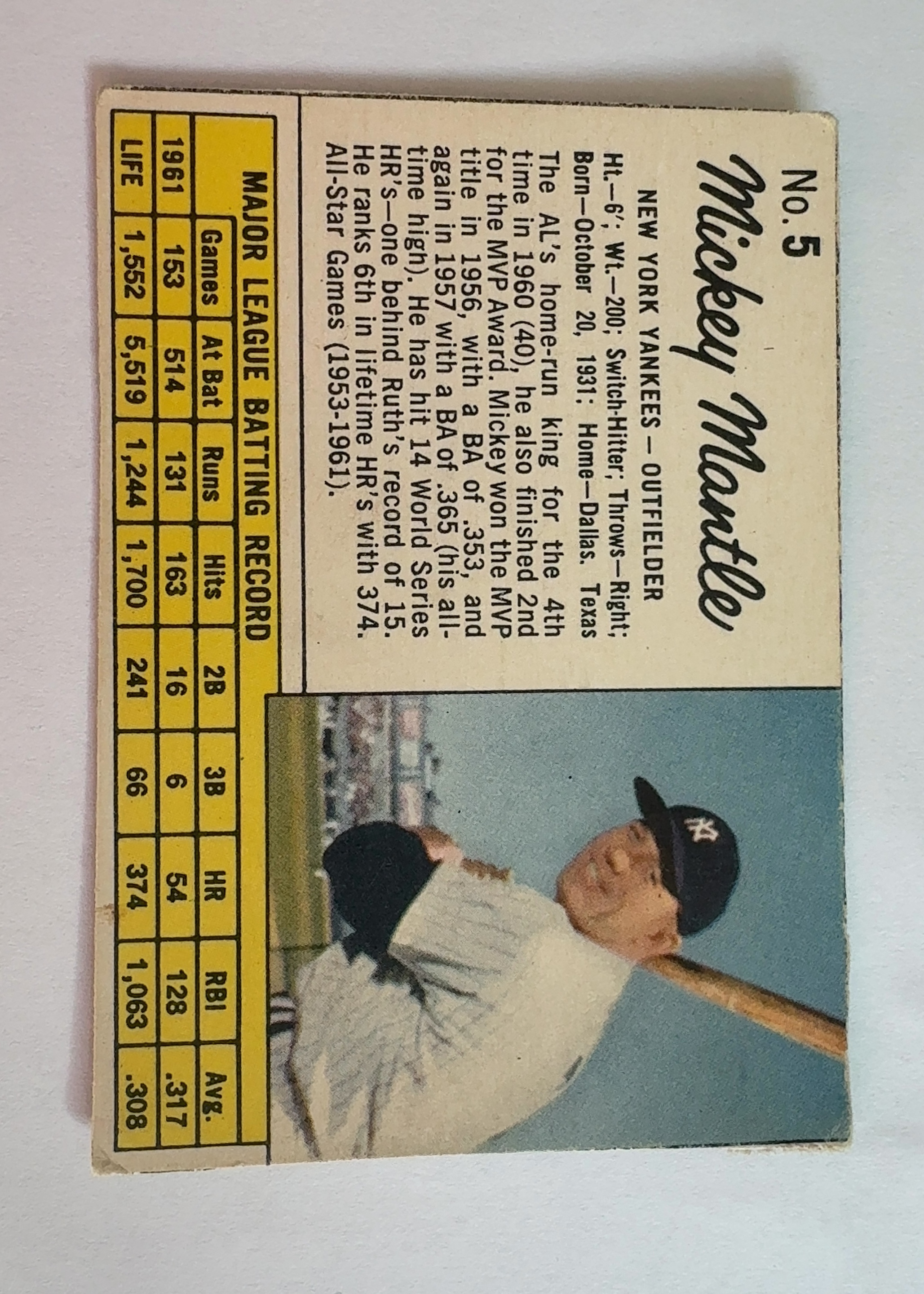
Locations refer to the photographs as displayed. Front: top-left D, rounded with exposed pale paper; top-right D, visibly rounded and abraded; bottom-left E, compressed/frayed with a short diagonal corner crease; bottom-right C, softened with light whitening. Back: top-left D, rounded and worn; top-right D, rounded with pale abrasion; bottom-left C, softened with lighter wear; bottom-right D, visibly rounded. These are sports-card corners, so the curvature represents wear rather than a factory-rounded TCG cut.
How this affects your grade:
Corners accounts for a significant portion of the overall grade. Improving this area could increase the overall grade.
Issues Found (3)
bottom-left corner as photographed
Short diagonal corner crease with compressed and frayed pale cardboard.
top-left and top-right corners as photographed
Original square points are lost, leaving rounded, abraded corners.
top-left, top-right, and bottom-right corners as photographed
Visible rounding with exposed lighter cardboard fibers.
Front Side
Back Side
Analysis
Front: top edge has irregular cutting and repeated small losses along the black outline; right edge shows scattered nicks; bottom edge has a conspicuous pale worn strip beneath the portrait; left edge has lighter abrasion and a small interruption near its lower portion. Back: top edge is rough and lightly frayed, left and bottom edges show fine abrasion, and the right edge has lighter wear toward the corners.
How this affects your grade:
Edges accounts for a significant portion of the overall grade. Improving this area could increase the overall grade.
Issues Found (5)
top-left and top-right corners as photographed
Original square points are lost, leaving rounded, abraded corners.
bottom edge beneath the portrait as photographed
Extended pale abrasion and small chips interrupt the printed perimeter.
top and right edges as photographed
Scattered small perimeter nicks and irregularities.
top-left, top-right, and bottom-right corners as photographed
Visible rounding with exposed lighter cardboard fibers.
top edge as photographed
Roughened edge with localized fraying and pale abrasion.
Front Side
Back Side
Analysis
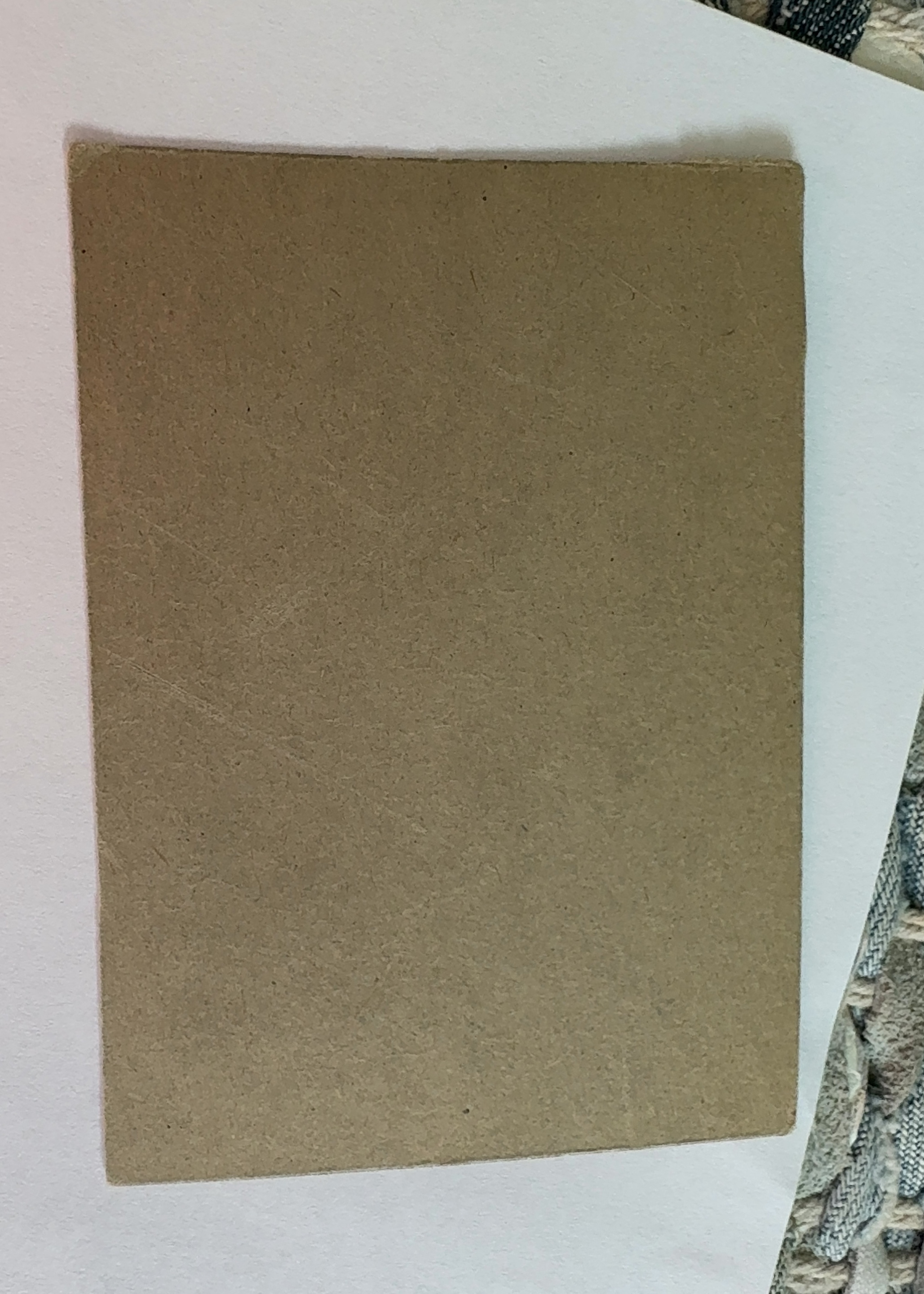
Front shows age-toned cream areas, light surface wear, and a short diagonal crease at the photographed bottom-left corner. No major central crease or tear is visible. Back is unprinted brown cardboard with several light diagonal scuffs, most noticeable left of center; its natural fibers and brown color are not themselves defects.
How this affects your grade:
Surface accounts for a significant portion of the overall grade. Improving this area could increase the overall grade.
Issues Found (6)
bottom-left corner as photographed
Short diagonal corner crease with compressed and frayed pale cardboard.
top-left and top-right corners as photographed
Original square points are lost, leaving rounded, abraded corners.
bottom edge beneath the portrait as photographed
Extended pale abrasion and small chips interrupt the printed perimeter.
top-left, top-right, and bottom-right corners as photographed
Visible rounding with exposed lighter cardboard fibers.
top edge as photographed
Roughened edge with localized fraying and pale abrasion.
left-center surface
Several fine diagonal rub marks are visible across the blank cardboard.
Front Side
Back Side
Analysis
Front cutting margins are uneven: the black outline nearly meets the photographed top edge, while a narrow pale margin remains along much of the opposite edge. This cereal-box design does not provide equivalent borders for a reliable conventional centering ratio; the score reflects visibly uneven cutting rather than a precise 50/50 measurement. The blank back has no printed registration or borders to measure; its numerical centering score is a neutral placeholder.
How this affects your grade:
Centering accounts for a significant portion of the overall grade. This strong score contributes well to the final grade.
Issues Found (1)
left-center surface
Several fine diagonal rub marks are visible across the blank cardboard.
Front Side
Back Side
Analysis
Not applicable; non-holographic cardboard.
How this affects your grade:
Holographic accounts for a significant portion of the overall grade. Improving this area could increase the overall grade.
No grading history available