
Hover to interact
Front
Photos
Hank Aaron
Card Owner
Card Collector • Premium
Connect with collectors • Discuss cards • Build community
Card Information
Grade Breakdown
ResultsFront Side
Back Side
Analysis
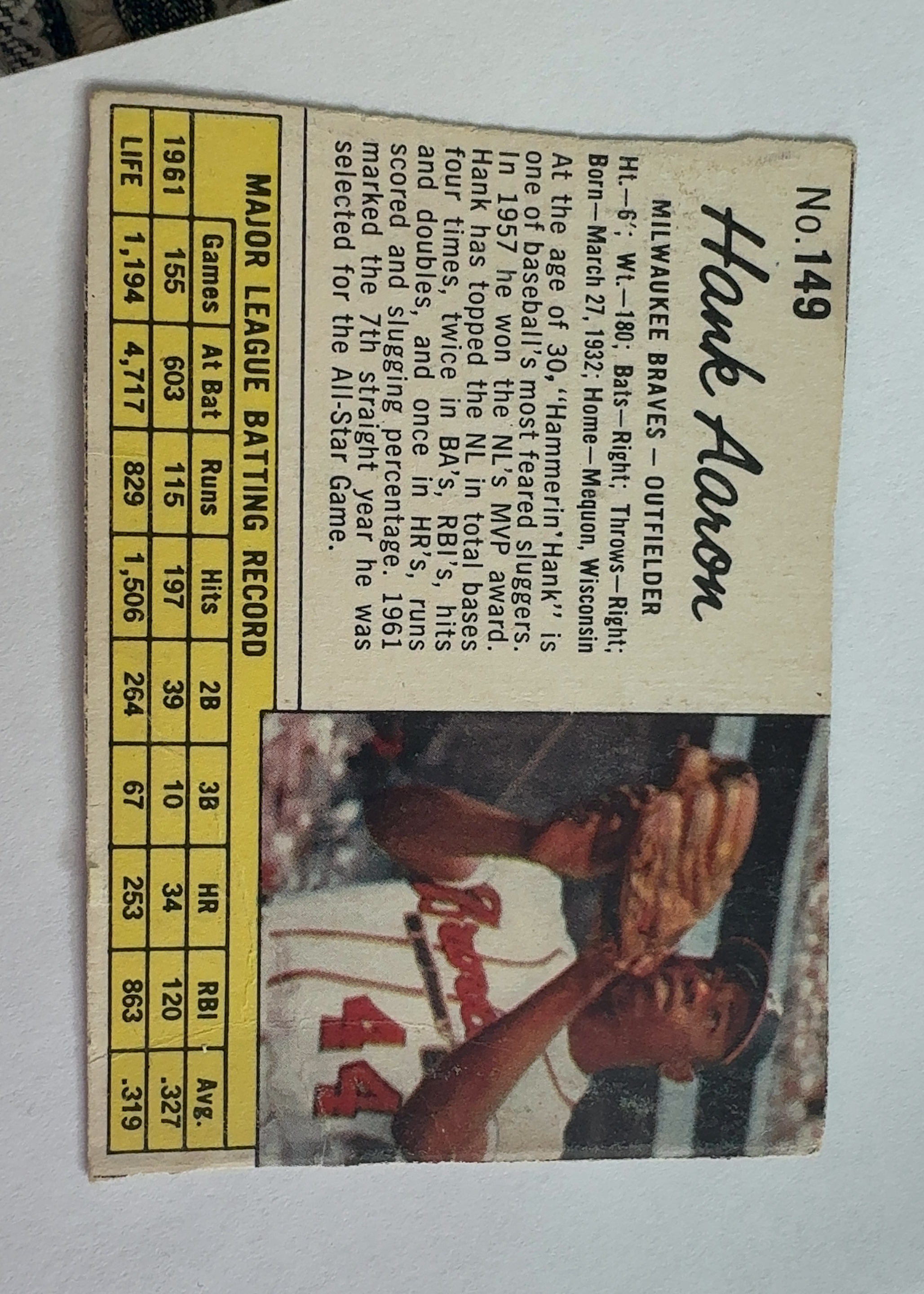
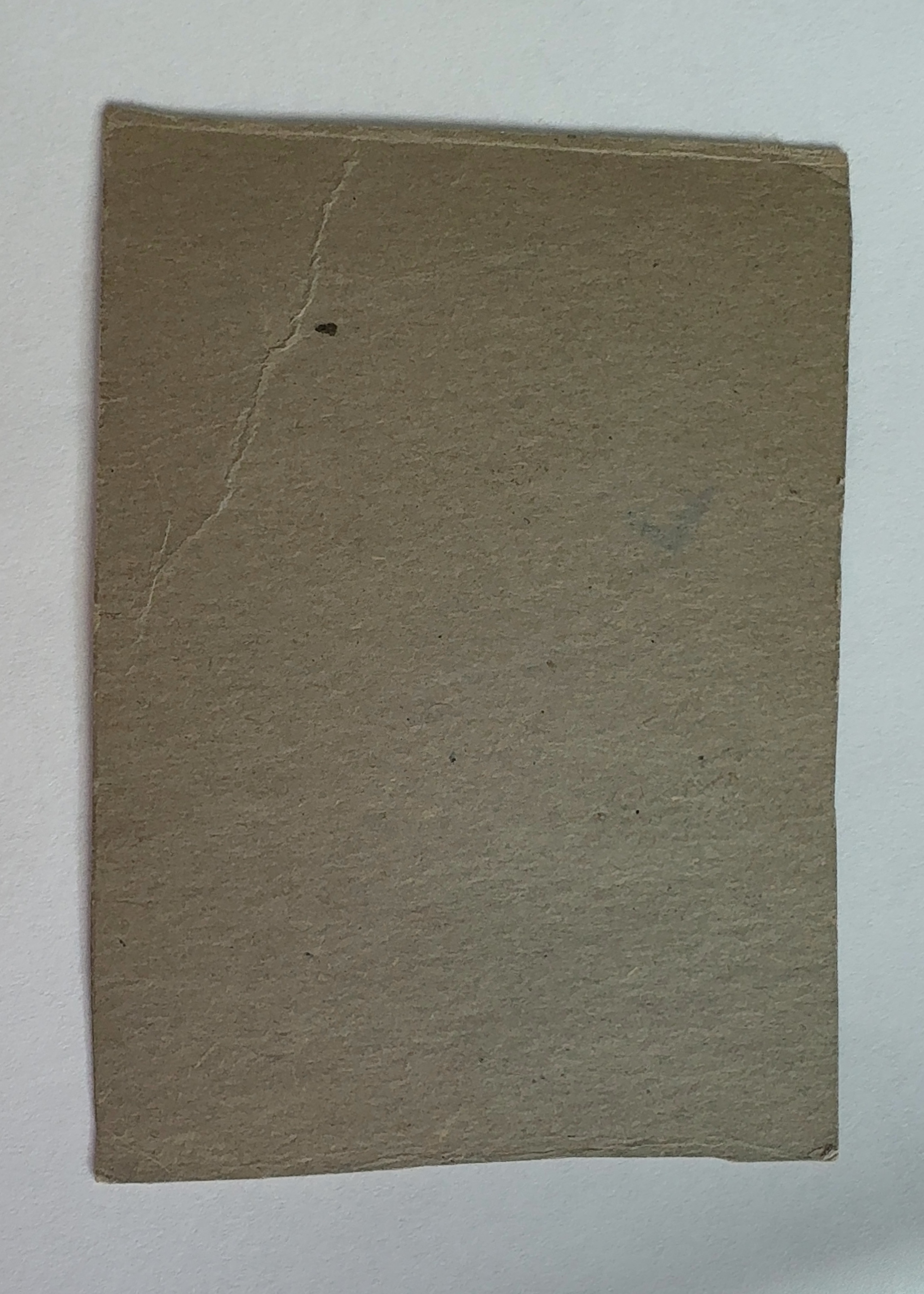
Locations refer to each photo as displayed. This sports card should have square corners. Front: top-left D, rounded with exposed pale fibers; top-right D, rounded and rough; bottom-left C, softened point with light wear; bottom-right D, rounded with abrasion. Back: top-left E, compressed and layered; top-right E, creased with separation near the tip; bottom-left D, rounded and rubbed; bottom-right E, visibly split and frayed.
How this affects your grade:
Corners accounts for a significant portion of the overall grade. Improving this area could increase the overall grade.
Issues Found (3)
back bottom-right corner
Corner tip shows splitting and frayed cardboard layers.
front perimeter and corners
Rounded corner points, exposed pale fibers, and scattered perimeter chipping.
front photograph and surrounding printed surface
Visible rubbing and scattered loss of printed surface, especially near the photograph's perimeter.
Front Side
Back Side
Analysis
Front: top edge is conspicuously uneven and abraded; left edge has scattered chips and small splits; right edge has rubbing beside the photograph; bottom edge is rough with exposed fibers. Back: top edge shows pronounced layering and a parallel compression line; left edge has abrasions and a split where the long crease approaches it; right edge is rubbed; bottom edge is uneven with compressed fibers and splitting near the right corner. Some unevenness may originate from cutting this cereal-box issue rather than subsequent wear.
How this affects your grade:
Edges accounts for a significant portion of the overall grade. Improving this area could increase the overall grade.
Issues Found (4)
back top edge
Layered, compressed cardboard runs along much of the edge, with a parallel fold or compression line.
front perimeter and corners
Rounded corner points, exposed pale fibers, and scattered perimeter chipping.
front left edge beside the lower statistics columns, as photographed
Short crease lines extend inward from the edge, including near the RBI/average portion of the table.
front top edge as photographed
Noticeably irregular cut with a shallow inward dip; potentially original cereal-box cutting rather than wear.
Front Side
Back Side
Analysis
Front has dull, rubbed printing, scattered abrasions, aged cream-colored stock, and short crease lines entering the statistics area from the left edge as displayed. Back has a prominent branching diagonal crease across the upper-left portion, additional edge-adjacent compression, and widespread fiber roughness. The blank cardboard reverse is appropriate for this issue and is not itself a defect.
How this affects your grade:
Surface accounts for a significant portion of the overall grade. Improving this area could increase the overall grade.
Issues Found (5)
back upper-left quadrant
Long branching diagonal crease extends from near the upper edge toward the left edge, visibly disrupting the cardboard fibers.
back top edge
Layered, compressed cardboard runs along much of the edge, with a parallel fold or compression line.
front perimeter and corners
Rounded corner points, exposed pale fibers, and scattered perimeter chipping.
front left edge beside the lower statistics columns, as photographed
Short crease lines extend inward from the edge, including near the RBI/average portion of the table.
front photograph and surrounding printed surface
Visible rubbing and scattered loss of printed surface, especially near the photograph's perimeter.
Front Side
Back Side
Analysis
Front has an irregular hand-cut outline and an asymmetric design, preventing reliable conventional border measurements. The narrow margins around the statistics panel appear approximately 60/40 to 70/30 locally; centering is estimated at 7. The blank back has no printed registration or borders to measure, so its centering score provisionally follows the front rather than representing an independently measured ratio.
How this affects your grade:
Centering accounts for a significant portion of the overall grade. Improving this area could increase the overall grade.
Front Side
Back Side
Analysis
Not applicable; non-holographic card.
How this affects your grade:
Holographic accounts for a significant portion of the overall grade. Improving this area could increase the overall grade.
No grading history available